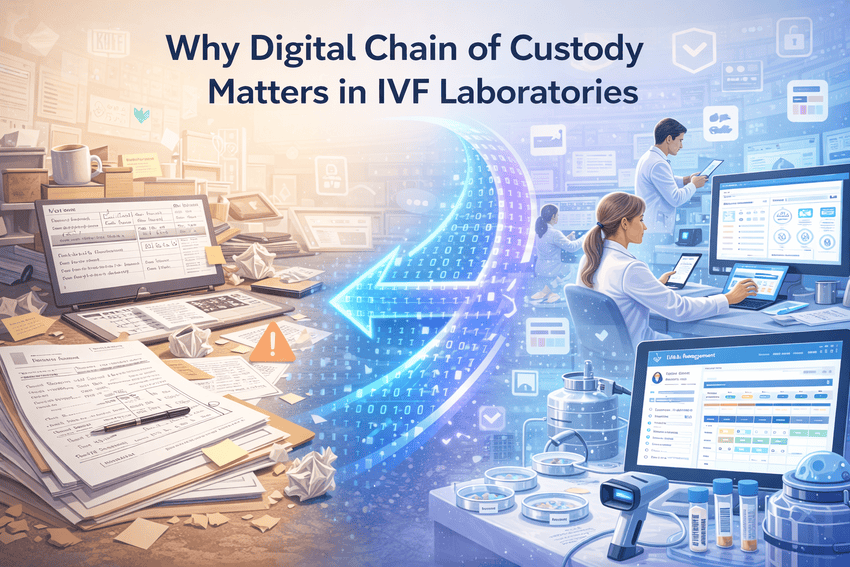
Why Digital Chain of Custody Matters in IVF Laboratories
In vitro fertilization (IVF) laboratories operate in one of the most precise and sensitive environments in healthcare. Each IVF cycle involves the handling of eggs, sperm, embryos, and other biological samples that must remain accurately linked to the correct patient throughout the entire treatment process.
Even a minor mistake in identifying or tracking samples can have serious medical, ethical, and legal consequences. Because of this, maintaining a clear and reliable chain of custody is one of the most critical responsibilities in an IVF laboratory.
Traditionally, many clinics relied on manual documentation, handwritten logs, and spreadsheets to track biological samples. While these methods worked in the early days of fertility treatments, modern IVF procedures require a far more reliable and scalable approach.
This is where digital chain of custody systems in IVF laboratories play a crucial role. Using IVF lab management software, digital IVF traceability systems, and IVF laboratory information management systems (IVF LIMS), clinics can track every step of the laboratory process with greater accuracy and transparency.
A digital chain of custody ensures that every sample—from egg retrieval to embryo transfer—is documented, verified, and traceable. This improves patient safety, regulatory compliance, and operational efficiency across fertility clinics.
Table of Contents
What Is Chain of Custody in IVF Laboratories?
Problems With Manual Chain of Custody Systems
What Is a Digital Chain of Custody System?
Why Digital Chain of Custody Is Essential in IVF Labs
How Digital Chain of Custody Supports IVF Lab Workflow
Sample Traceability and Patient Safety
Technologies Used in Digital Chain of Custody
Manual vs Digital Chain of Custody
Benefits for Fertility Clinics
How Clinics Can Implement Digital Chain of Custody
FAQs
Conclusion
What Is Chain of Custody in IVF Laboratories?
The chain of custody refers to the documented process of tracking biological samples as they move through the IVF laboratory workflow. This includes monitoring every step from egg retrieval and sperm preparation to fertilization, embryo culture, cryopreservation, and embryo transfer.
Each stage of the process must maintain a clear record of who handled the sample, when the procedure occurred, and what actions were performed. This documentation ensures that eggs, sperm, and embryos remain correctly associated with the right patient.
In IVF laboratories, maintaining a chain of custody is essential because multiple biological samples may be processed simultaneously. Without proper tracking, there is a risk of sample misidentification or loss of traceability.
A structured chain of custody helps ensure:
- Accurate identification of biological samples
- Clear documentation of laboratory procedures
- Compliance with regulatory requirements
- Transparency during audits and inspections
As IVF clinics handle increasing numbers of treatment cycles, maintaining an accurate chain of custody becomes even more important.
Problems With Manual Chain of Custody Systems
Historically, many fertility clinics relied on manual record keeping to maintain the chain of custody. Staff members documented procedures in spreadsheets, logbooks, or printed forms.
While these systems may appear straightforward, they present several limitations in modern IVF laboratories.
Manual documentation can lead to:
- Human errors during data entry
- Incomplete or inconsistent records
- Difficulty tracking multiple samples simultaneously
- Lack of real-time visibility into laboratory workflows
- Challenges during compliance audits
As clinics expand and handle more IVF cycles, these risks increase significantly. This is why many laboratories are moving toward digital traceability systems.
What Is a Digital Chain of Custody System?
A digital chain of custody system uses software and tracking technologies to automatically document and verify every step of the IVF laboratory process.
Instead of relying on handwritten logs, digital systems capture laboratory events in real time using specialized platforms such as IVF lab management software or IVF LIMS systems.
These systems allow clinics to track:
- Egg retrieval procedures
- Sperm preparation
- Fertilization and embryo development
- Cryopreservation and storage
- Embryo transfer
Because all activities are digitally recorded, clinics can maintain a complete and transparent record of laboratory processes.
Why Digital Chain of Custody Is Essential in IVF Labs
Digital chain of custody systems provide several critical benefits for IVF laboratories.
First, they significantly reduce the risk of sample misidentification. Automated tracking ensures that every sample is linked to the correct patient.
Second, digital systems improve workflow visibility. Laboratory staff can monitor treatment progress and sample status in real time.
Third, digital platforms support regulatory compliance by maintaining automated audit trails that document laboratory procedures.
Finally, digital chain of custody systems improve patient confidence. Knowing that clinics use advanced technology to track biological samples reassures patients that their treatment is handled safely.
How Digital Chain of Custody Supports IVF Lab Workflow
Modern IVF laboratories rely on coordinated workflows between clinicians, embryologists, and laboratory technicians. Each treatment cycle requires precise timing and accurate documentation.
Digital systems help manage these workflows by providing structured process tracking.
Key workflow benefits include:
- Automated procedure documentation
- Real-time monitoring of treatment cycles
- Centralized laboratory data access
- Improved communication between clinical teams
These capabilities allow fertility clinics to maintain consistent processes across all laboratory procedures.
Sample Traceability and Patient Safety
Traceability is one of the most critical aspects of IVF laboratory operations. Every biological sample must remain correctly identified and associated with the appropriate patient.
Digital systems enable advanced sample traceability using barcode scanning or RFID technology. Each sample container receives a unique identifier that can be scanned during laboratory procedures.
This ensures that:
- Samples are verified before each procedure
- Laboratory staff follow standardized identification protocols
- All actions are recorded in a digital log
By implementing digital traceability, clinics can significantly reduce the risk of errors and enhance patient safety.
Technologies Used in Digital Chain of Custody
Several technologies support digital chain of custody systems in IVF laboratories.
These technologies include:
- Barcode-based sample identification
- RFID tracking systems
- Automated witnessing platforms
- IVF laboratory information management systems
- Cloud-based fertility clinic software
Together, these technologies create a reliable infrastructure for tracking biological samples throughout the IVF process.
Manual vs Digital Chain of Custody
| Aspect | Manual System | Digital Chain of Custody |
|---|---|---|
| Sample Tracking | Manual logs | Automated digital tracking |
| Data Accuracy | High risk of errors | Automated verification |
| Workflow Visibility | Limited | Real-time monitoring |
| Compliance | Manual documentation | Automated audit trails |
| Scalability | Difficult for large clinics | Supports high treatment volumes |
Benefits for Fertility Clinics
Implementing digital chain of custody systems offers several advantages for fertility clinics.
- Improved patient safety
- Better sample traceability
- Reduced risk of human error
- Enhanced regulatory compliance
- Improved operational efficiency
These benefits make digital traceability systems an essential component of modern IVF laboratories.
How Clinics Can Implement Digital Chain of Custody
Implementing digital chain of custody requires careful planning and technology adoption. Clinics must evaluate software solutions that support laboratory workflows and regulatory compliance.
Key steps include:
- Selecting the right IVF lab management software
- Training laboratory staff on digital workflows
- Integrating traceability technologies such as barcode systems
- Ensuring secure patient data storage
- Establishing standardized documentation protocols
With proper implementation, clinics can successfully transition from manual record keeping to reliable digital systems.
Risk Management and Compliance in IVF Laboratories
In IVF laboratories, maintaining strict control over biological samples is not only a matter of operational efficiency but also a critical aspect of risk management. Fertility clinics must follow strict regulatory standards that govern how patient data and biological materials are handled, stored, and documented.
A reliable digital chain of custody system plays a vital role in reducing risks associated with manual documentation. By automatically recording laboratory actions, digital systems ensure that every step in the IVF process is traceable and verifiable. This level of transparency is essential for maintaining regulatory compliance and ensuring patient safety.
Regulatory authorities and accreditation bodies often require clinics to demonstrate clear documentation of laboratory procedures. Digital systems simplify this process by maintaining automated audit trails that capture important information such as timestamps, user activity, and sample handling procedures.
Another important advantage of digital chain of custody systems is the ability to quickly identify and investigate potential issues. If a discrepancy occurs in laboratory records, digital tracking allows clinics to trace the exact point in the workflow where the event occurred. This capability improves accountability and helps clinics resolve problems more efficiently.
Risk management is especially important as IVF clinics expand their operations and handle larger volumes of treatment cycles. Without reliable digital systems, managing these complexities becomes increasingly difficult.
By implementing IVF laboratory information management systems and digital traceability tools, clinics can strengthen quality control procedures, protect patient data, and maintain the highest standards of laboratory safety.
FAQs
1. What is chain of custody in IVF laboratories?
Chain of custody refers to the process of tracking biological samples throughout the IVF treatment cycle to ensure accurate identification and documentation.
2. Why is digital chain of custody important?
Digital systems reduce human errors, improve sample traceability, and ensure compliance with regulatory requirements.
3. What technologies support digital chain of custody?
Technologies such as barcode scanning, RFID tracking, automated witnessing systems, and IVF laboratory information management systems support digital traceability.
4. Can digital chain of custody improve patient safety?
Yes. By ensuring accurate sample identification and documentation, digital systems significantly reduce risks associated with laboratory errors.
5. Do all IVF clinics use digital traceability systems?
Many modern clinics are adopting digital systems, although some still rely on manual processes. However, digital traceability is becoming the industry standard.
Conclusion
Maintaining an accurate chain of custody is essential for the safety and reliability of IVF laboratory procedures. As fertility clinics grow and treatment cycles become more complex, manual documentation systems are no longer sufficient.
By adopting digital chain of custody solutions, clinics can ensure accurate sample tracking, improve workflow transparency, and maintain regulatory compliance. Technologies such as fertility clinic software and laboratory information management systems provide the tools necessary to manage modern IVF laboratories efficiently.
In the future, digital traceability will become a standard requirement for fertility clinics seeking to deliver safe, reliable, and technologically advanced reproductive care.