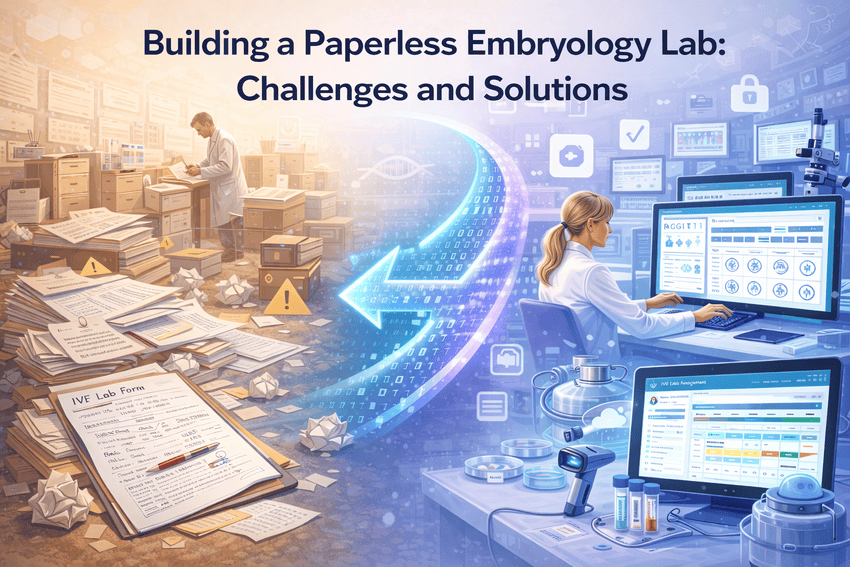
Building a Paperless Embryology Lab: Challenges and Solutions
Embryology laboratories are the heart of fertility clinics. Every IVF treatment cycle involves complex laboratory procedures that must be recorded accurately and tracked carefully. From egg retrieval to embryo development and cryopreservation, embryologists manage sensitive biological materials that require strict documentation and traceability.
Traditionally, many laboratories relied on paper logs, spreadsheets, and manual documentation to record laboratory activities. However, paper-based systems often lead to inefficiencies, documentation errors, and limited traceability.
This is why many fertility clinics are now transitioning toward a paperless embryology lab. By adopting digital embryology lab systems, IVF lab management software, and modern IVF laboratory information management systems, clinics can replace manual processes with structured digital workflows.
A paperless approach not only improves laboratory efficiency but also enhances patient safety, regulatory compliance, and data accuracy.
Table of Contents
What Is a Paperless Embryology Lab?
Why Fertility Clinics Are Moving Toward Paperless Labs
Challenges of Building a Paperless Embryology Lab
Solutions for Implementing Digital Embryology Systems
Key Features of Digital Embryology Lab Systems
How Digital Workflow Improves IVF Lab Operations
Sample Traceability in Paperless IVF Labs
Paper Records vs Paperless Embryology Labs
Benefits of a Paperless Embryology Laboratory
Future of Digital Embryology Labs
FAQs
Conclusion
What Is a Paperless Embryology Lab?
A paperless embryology lab is a laboratory environment where all documentation, workflow tracking, and patient records are managed digitally instead of using paper logs or spreadsheets.
These laboratories rely on IVF lab management software and digital record systems for IVF labs to manage treatment cycles, laboratory procedures, and biological sample tracking.
Instead of manually recording information on paper, embryologists use digital platforms to:
- Track embryo development stages
- Document laboratory procedures
- Monitor cryostorage inventory
- Maintain patient treatment records
- Generate laboratory reports
By centralizing laboratory data into one system, fertility clinics can create a structured and efficient digital workflow.
Why Fertility Clinics Are Moving Toward Paperless Labs
Modern fertility clinics handle increasing numbers of IVF treatment cycles every year. Managing this growing volume of data with paper-based systems is inefficient and risky.
Paper documents can be misplaced, damaged, or incorrectly recorded. Additionally, manual documentation slows down laboratory workflows and makes compliance reporting more difficult.
Digital systems provide a more reliable solution. With IVF lab data management software, clinics can maintain accurate digital records while improving laboratory efficiency.
Key reasons clinics adopt paperless systems include:
- Improved laboratory workflow management
- Better sample traceability
- Reduced documentation errors
- Faster reporting and analytics
- Enhanced regulatory compliance
These advantages make digital transformation essential for modern embryology laboratories.
Challenges of Building a Paperless Embryology Lab
While the benefits of a paperless laboratory are significant, transitioning from manual systems can present several challenges.
One of the main challenges is adapting existing workflows. Many laboratory teams are accustomed to paper documentation, and switching to digital systems may require training and workflow adjustments.
Another challenge involves system integration. Fertility clinics often use multiple healthcare systems for patient records, billing, and laboratory operations. Integrating these systems with digital embryology software can require careful planning.
Data security is also a concern. Clinics must ensure that digital systems comply with healthcare data protection regulations.
Common challenges include:
- Staff training and adoption
- Integration with existing clinic software
- Initial implementation costs
- Data migration from paper records
Despite these challenges, most clinics find that the long-term benefits of digital systems outweigh the initial transition difficulties.
Solutions for Implementing Digital Embryology Systems
Successfully building a paperless embryology lab requires careful planning and the right technology.
Clinics can start by implementing an IVF laboratory information management system that centralizes laboratory data and supports digital workflows.
Another key step is establishing standardized digital protocols for laboratory procedures. This ensures that embryologists record information consistently across treatment cycles.
Training is also essential. Laboratory teams must understand how to use the software effectively to manage workflows and maintain accurate documentation.
With the right strategy, clinics can gradually transition from paper-based systems to fully digital laboratories.
Key Features of Digital Embryology Lab Systems
Modern embryology lab management software provides several advanced features designed to improve laboratory operations.
- Centralized patient and treatment records
- Automated IVF lab workflow management
- Integrated IVF digital traceability systems
- Secure access control for laboratory staff
- Advanced reporting and analytics
- Automated documentation of laboratory procedures
These features allow clinics to manage complex IVF procedures with greater accuracy and efficiency.
How Digital Workflow Improves IVF Lab Operations
A digital workflow allows embryologists to track laboratory procedures in real time. Instead of manually updating spreadsheets or paper forms, all data is recorded directly into the system.
Benefits of digital workflows include:
- Faster documentation of procedures
- Improved communication between clinicians and embryologists
- Reduced administrative workload
- More consistent laboratory protocols
This structured workflow helps clinics maintain higher levels of accuracy and efficiency.
Sample Traceability in Paperless IVF Labs
Sample identification is one of the most critical aspects of IVF laboratory operations.
Digital traceability systems ensure that eggs, sperm, and embryos remain correctly matched to patients throughout the treatment process.
These systems typically use barcode scanning or RFID technology to track samples during laboratory procedures.
With IVF sample tracking software, clinics can significantly reduce the risk of sample misidentification.
Paper Records vs Paperless Embryology Labs
| Aspect | Paper-Based Labs | Paperless Labs |
|---|---|---|
| Data Storage | Physical files and notebooks | Centralized digital database |
| Sample Tracking | Manual labels | Automated digital traceability |
| Workflow Management | Manual coordination | Integrated digital workflow |
| Reporting | Manual compilation | Automated reports |
Benefits of a Paperless Embryology Laboratory
Moving to a paperless laboratory provides several advantages for fertility clinics.
- Improved laboratory efficiency
- Better data accuracy
- Enhanced patient safety
- Faster compliance reporting
- More reliable sample tracking
These improvements allow clinics to focus more on patient care rather than administrative tasks.
Future of Digital Embryology Labs
The future of embryology laboratories is increasingly digital. Emerging technologies such as artificial intelligence, predictive analytics, and automated laboratory equipment will further enhance IVF lab management systems.
These technologies will allow clinics to analyze treatment outcomes more effectively and improve IVF success rates.
As fertility treatments continue to evolve, digital platforms will play a critical role in supporting modern reproductive medicine.
Steps to Transition from Paper-Based to Paperless Embryology Labs
Moving from traditional paper documentation to a paperless embryology lab requires careful planning and gradual implementation. While the benefits of digital systems are significant, clinics should follow a structured approach to ensure a smooth transition for laboratory staff and clinical teams.
The first step is evaluating current workflows. Many embryology labs rely on paper forms for recording embryo grading, cryostorage logs, and laboratory observations. Identifying which processes are still manual helps clinics determine where digital tools can provide the most value.
The next step is selecting reliable IVF lab management software or an IVF laboratory information management system that supports digital record management. The right software should allow embryologists to record laboratory activities digitally, track treatment cycles, and maintain accurate patient records.
Another important step is migrating existing records into the digital system. Historical patient data, laboratory notes, and cryostorage records should be digitized so that the clinic has a centralized database for all IVF procedures.
Training laboratory staff is also essential during implementation. Embryologists and clinicians must understand how to use the digital embryology lab system effectively. This includes learning how to document procedures, track biological samples, and generate reports.
Clinics should also establish clear digital workflows for laboratory tasks. With IVF lab workflow management tools, embryologists can track each stage of the treatment cycle, ensuring that procedures are performed consistently and documented accurately.
Once implemented, a paperless system allows clinics to streamline laboratory operations. Digital records improve data accuracy, simplify compliance reporting, and provide better visibility into laboratory performance.
Over time, transitioning to a digital record system for IVF labs enables fertility clinics to improve operational efficiency while maintaining the highest standards of patient safety and laboratory traceability.
Data Security and Compliance in Paperless Embryology Labs
As fertility clinics transition toward a paperless embryology lab, protecting sensitive patient and laboratory data becomes a top priority. IVF laboratories handle highly confidential medical information, including patient histories, treatment outcomes, and embryo development records. Implementing a secure digital system ensures that this information is stored, accessed, and managed safely.
Modern IVF lab management software includes advanced security features designed specifically for healthcare environments. These systems typically provide encrypted data storage, secure login protocols, and role-based access controls that allow only authorized staff to view or modify sensitive information.
Compliance with healthcare regulations is another major advantage of digital systems. Many regulatory authorities require fertility clinics to maintain detailed documentation of laboratory procedures, patient records, and sample handling processes. Using an IVF laboratory information management system helps clinics automatically generate audit trails that record every action taken within the system.
Digital systems also support secure data backups and disaster recovery strategies. Unlike paper records, which can be lost or damaged, digital records can be backed up regularly and stored securely in cloud-based environments. This ensures that critical laboratory data remains accessible even in the event of technical failures.
Another important aspect of digital compliance is accurate documentation of laboratory workflows. With IVF lab workflow management tools, embryologists can record each step of the IVF process in real time. This not only improves laboratory transparency but also helps clinics meet regulatory reporting requirements.
By combining strong security measures with structured digital documentation, a paperless embryology lab creates a safer and more reliable environment for managing IVF procedures and patient data.
FAQs
1. What is a paperless embryology lab?
A paperless embryology lab uses digital systems instead of paper records to manage laboratory workflows, patient data, and sample tracking.
2. Why are IVF labs moving toward digital systems?
Digital systems improve data accuracy, enhance traceability, and simplify laboratory workflow management.
3. What software is used in a paperless IVF lab?
Clinics typically use IVF lab management software or an IVF laboratory information management system.
4. Is digital traceability important in IVF labs?
Yes. Digital traceability systems ensure accurate tracking of biological samples throughout IVF treatment cycles.
5. What are the benefits of replacing paper records in IVF labs?
Replacing paper records improves efficiency, reduces errors, and enhances patient safety.
Conclusion
Building a paperless embryology lab represents an important step toward modernizing fertility clinic operations. By adopting digital embryology lab systems and fertility clinic software, clinics can improve workflow efficiency, maintain accurate records, and ensure better traceability of biological samples.
As fertility treatments continue to advance, digital laboratory systems will become essential tools for delivering safe, efficient, and high-quality reproductive care.