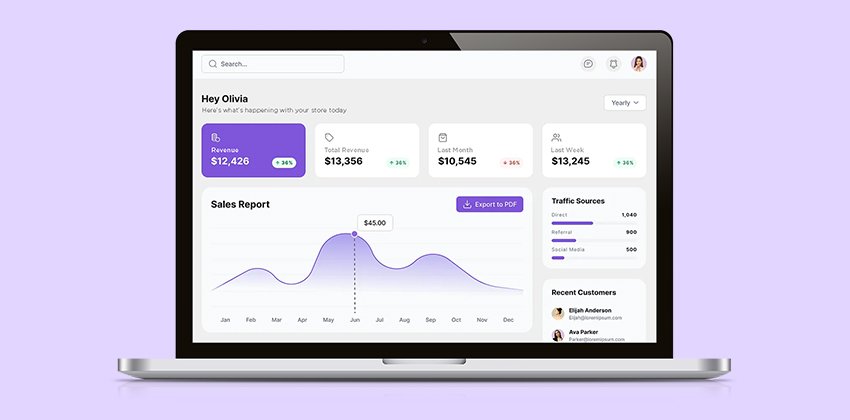
Global search lets IVF staff find a patient, a result or a document from one box instead of clicking through separate screens. It matters because the same lookup happens dozens of times a day, so the seconds saved on each one add up across the whole team.
A patient calls and you need their file now, not after four screens and a guess at the spelling of their name. Multiply that by every lookup your staff do in a day and search speed becomes one of the quietest costs in a clinic. A global search feature lets anyone type a name, a phone number or a cycle ID and land on the right record in seconds. This post shows what a good global search does, what breaks without one and how much time it hands back to your team.
Without one search box that reaches everything, finding a record becomes a hunt. Staff open the EMR, then the lab system, then billing, each with its own login and its own way of spelling a name. A misremembered surname sends them scrolling. A patient with a common name returns a dozen matches to sort by hand. None of it is dramatic. It is a few seconds here and a couple of minutes there, repeated across every lookup until the lost time is real.
Global search is not the little filter box inside one module. It is one search that reaches across the whole system at once. You type once and it looks through patient records, cycle data, lab results, documents and billing together, then shows the best matches ranked in front of you. It should be forgiving too, matching a partial name, a misspelling or a phone number so staff find the record even when they only half remember it. The point is simple. One box, everything, fast.
| Moment | Without global search | With global search |
|---|---|---|
| Patient on the phone | Open several systems and scroll | Type the name, open the record |
| Doctor mid-consult | Ask staff to dig out results | Pull the cycle in one search |
| Lab needs a chart | Switch apps and re-login | Jump straight to the sample |
| Billing query | Match records by hand | Find the account instantly |
| Common name | Sort a dozen matches | Filter by phone or cycle ID |
The value shows up in ordinary moments. A patient at the front desk is identified before they finish their sentence. A doctor in a consult pulls the last cycle without leaving the room or asking a nurse to fetch it. An embryologist confirms which patient a lab sample belongs to without switching apps. Billing settles a query by finding the account on the first try. Each of these used to mean a pause and a hunt. With one search they become a single keystroke and the clinic keeps moving.
A search is only as wide as the data it can reach. If your lab, records and billing live in separate systems no search box can span them, because there is no shared ground underneath. Global search depends on one connected platform where every module writes to the same place. That is why a true one connected platform makes search instant while a stack of bolted-together tools leaves each search stuck inside its own silo. The search feature is really a symptom of good architecture.
A good global search does more than find fast. It respects roles, so a user only sees the records they are allowed to open. It supports filters, so a broad search narrows to a site, a date range or a visit type in one more click. It reaches documents and scanned files, not just typed fields, so a consent form or a report surfaces alongside the record. These touches are what separate a search that staff trust from one they learn to avoid. You can see the range of these platform features working together rather than in isolation.
Vitrify is built as one system for fertility care, so its global search reaches everything at once. Type a name, a phone number or a cycle ID and it looks across records, cycles, lab data, documents and billing together, ranks the matches and respects who is allowed to see what. Because every module runs on the same record there is no silo for a search to fall into. Your staff stop hunting across screens and get the file in front of them in seconds. Book a demo and try a search across a whole clinic in one box.
It is a single search box that reaches across the whole system at once instead of one module at a time. You type a name, a phone number or a cycle ID and it returns matching patient records, lab results, documents and billing entries together. It saves staff from opening several systems to find one file.
It replaces the hunt across separate systems with one lookup. Instead of logging into the EMR then the lab then billing to piece a patient together, staff type once and land on the right record. Repeated across every lookup in a day that recovered time is real even without counting exact minutes.
Staff jump between systems that each hold a fragment of the patient, re-logging in and re-spelling names as they go. Common names return long lists to sort by hand and a misremembered detail sends someone scrolling. The delays are small on their own but they repeat all day and interrupt patients and clinicians alike.
Only partly. A search can reach only the data that sits on the same platform, so separate lab, records and billing systems leave each search stuck in its own silo. Global search works best when every module writes to one shared record, which is what lets a single query span the whole clinic.
A well-built global search follows the same permissions as the rest of the system, so each user sees only the records their role allows. It speeds up finding a file without widening who can open it. Access stays controlled while the lookup gets faster.
Global search looks like a small feature until you count how often your staff go looking for a record. One box that spans patient records, lab data, documents and billing turns a daily hunt into a single keystroke and hands the time back to care. It only works on a connected system where everything shares one record, which is exactly how Vitrify is built. Book a demo and see how fast the right file appears when nothing is hidden in a silo.