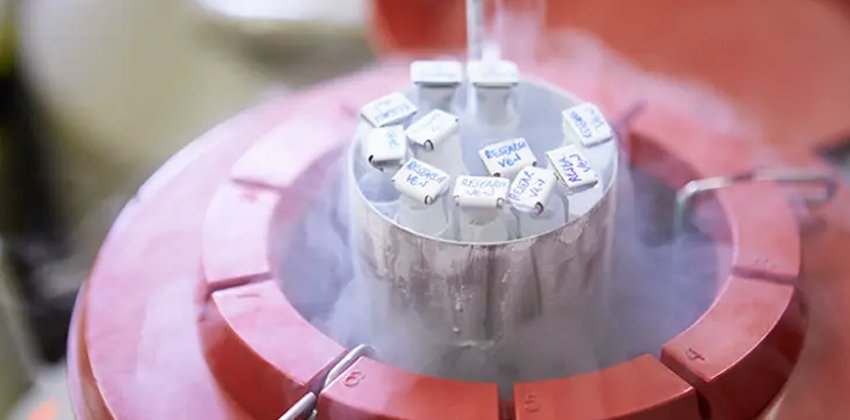
Donor data carries a real person's identity, their medical screening and consents governing how the donation may be used. Managing it securely means controlling who can see which parts, holding consent in a form that actually governs use, then protecting the record itself through encryption and access logs.
Donor data is some of the most sensitive information a fertility clinic holds. It carries a real person's identity, their medical screening and consents about how their donation may be used and who may ever know their name. Get the handling wrong and you have not just a data problem, you have a trust problem and possibly a legal one. This post is about protecting donor records properly: keeping identities private, honoring consent, controlling who can see what and being able to prove all of it later. Not efficiency for its own sake. Security you can stand behind.
A donor is not a patient in the usual sense. They may have been promised anonymity, they may have set limits on how their donation is used and their identity may need to stay hidden from the recipients who benefit from it. At the same time some jurisdictions give donor-conceived people a right to identifying information at a certain age, so the same record has to be both closely guarded and reliably retrievable years later. Handling that on paper or in an open spreadsheet is where clinics get exposed. Anyone with the file has everything and there is no record of who looked.
The stakes are not abstract. A leaked donor identity or a consent that was ignored can end a donor relationship, breach a promise you made and land the clinic in a dispute it cannot easily defend. Security here is part of the clinical duty, not an IT afterthought.
The first line of protection is access control. Not everyone in the clinic needs a donor's full identity, so the system should decide what each role can open. A coordinator arranging a match may need physical attributes and screening status without ever seeing the donor's legal name. Billing may see nothing clinical at all. Role-based permissions make that the default rather than a matter of trust and habit. When you run donor records inside ART bank and donor management the identity fields can be restricted to the few people who genuinely need them, while the rest of the team works from the anonymized profile.
This is also how you support anonymity in practice. If a recipient's team can never open the donor's identifying fields, the promise of anonymity is enforced by the system instead of resting on people remembering to keep quiet.
A consent form is worthless if it sits in a folder while the donation gets used outside what was agreed. Donor consent covers real limits: how many families, which uses are permitted, whether identity can be released and when. Those terms need to live on the donor record and shape what the software allows. If a donor consented to a family limit, the record should carry that limit and flag when it is reached. If they did not consent to identity release, that field stays closed. Consent stops being paper and becomes a rule the system honors on every cycle.
Keeping consent digital on the record also means you always know the current status. Versions, dates and what was agreed are on the profile rather than in a drawer, so nobody acts on a consent that was later withdrawn.
Access rules protect data from the people inside your clinic. You also have to protect it from everyone outside. That means the donor record should be stored securely and moved securely, with sensitive fields encrypted so a stolen file or an intercepted transfer is not readable. A centralized fertility clinic EMR that keeps donor records in one protected place is safer than the same data scattered across laptops, email attachments and shared drives where any single weak spot exposes it. The fewer copies floating around, the smaller the surface anyone can attack.
Security you cannot demonstrate is hard to trust. With donor data you often need to answer a pointed question much later: who accessed this record, who released this identity, when was this consent recorded and by whom. An audit trail answers that. Every view, edit and disclosure is logged automatically, so the history is there whether the query comes from a patient, a donor or a regulator. Software that helps clinics meet consent, privacy and traceability obligations gives you that record without anyone maintaining it by hand.
A defensible donor record can show, on demand:
Who has viewed or edited the record and when
When each consent was captured and what it covered
Every cycle a donor's samples were used in
Any release of identifying information and its basis
Which staff role held access to which fields
| Risk | Open Spreadsheet or Paper | Secured Fertility Software |
|---|---|---|
| Who can see identity | Anyone with the file | Only permitted roles |
| Anonymity | Rests on people staying quiet | Enforced by access rules |
| Consent limits | Filed and easy to overlook | Carried on the record and flagged |
| Data in transit | Emailed or copied around | Stored and moved securely |
| Proof of access | None | Logged automatically |
Donor records have unusually long lives. A donation made today may be relevant to a family for decades and a donor-conceived person may come asking about it long after the donor stopped attending. Secure handling means the record survives that timeline intact and protected, with its consents and its history still readable and still restricted to the right people. Ad hoc files do not last that well. They get lost in staff turnover, format changes and the slow rot of shared drives. Keeping donor data in a single governed system is how you keep it both safe and available for as long as it legally matters.
Vitrify is built so donor data is protected by design rather than by good intentions. Identity fields sit behind role-based access, consent lives on the record and governs what the system permits, sensitive data is stored and moved securely and every access is logged in an audit trail you can produce on demand. It does not claim to certify your clinic against any regime. It gives you the controls that help you meet your consent, privacy and traceability obligations and prove you met them. If donor records are currently spread across spreadsheets and drives, moving them into one secured system is the single biggest step you can take. Book a demo and see how tightly donor data can be held.
A donor's record often carries promises of anonymity and specific consents about how the donation may be used. It has to stay hidden from recipients yet remain retrievable years later, sometimes for a donor-conceived person with a legal right to information. That mix of secrecy and long-term retrieval is what makes it harder to handle safely on paper or in open files.
By controlling access at the field level. The people arranging a match can work from physical attributes and screening status while the donor's identifying fields stay closed to them. Anonymity is then enforced by the system rather than depending on staff remembering to keep quiet, which is far more reliable.
Yes, when consent lives on the donor record and shapes what the software allows. A family limit the donor agreed to can be carried on the record and flagged when reached. An identity that was not consented for release stays closed. The consent governs use instead of sitting unread in a folder.
Because you may need to prove, long after the fact, who accessed a record, who released an identity and when a consent was captured. An audit trail logs every view, edit and disclosure automatically, so you can answer a patient, a donor or a regulator with the actual history rather than a guess.
No software makes a clinic compliant on its own. Any software that claims to certify you should be treated with caution. What good software does is give you the controls that help you meet consent, privacy and traceability obligations and the records to demonstrate it. Compliance still rests on your clinic's own policies and practice.
Protecting donor data is about honoring what you promised the donor and being able to prove you did. Control who can see an identity, let consent govern how a donation is used, store the data securely and log every access so the history is never in doubt. Do that and donor privacy stops being a worry you carry and becomes a property of the system you run on. Vitrify is built to hold donor data that closely. Book a demo and see what secure donor management looks like in practice.